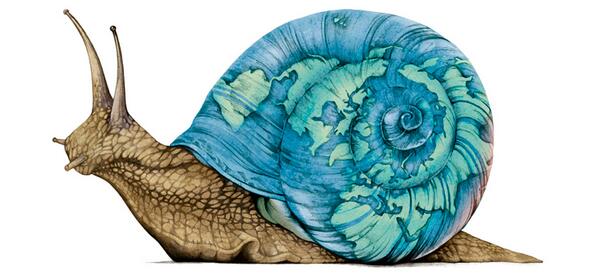
It’s the 20th annual Buy Nothing Day, an all-out offensive to unseat the corporate kings on the holiday throne.

Historically, Buy Nothing Day has been about fasting from hyper consumerism – a break from the cash register and reflecting on how dependent we really are on conspicuous consumption.

This year’s Black Friday will be the first campaign of the holiday season where activists are setting the tone for a new type of holiday culminating with #OCCUPYXMAS. As the global protests of the 99% against casino capitalism continues, why not take the opportunity to hit the empire where it really hurts…the wallet.

On Nov 25th we escape the mayhem and unease of the biggest shopping day in North America and put the breaks on rabid consumerism for 24 hours. Flash mobs, consumer fasts, mall sit-ins, community events, credit card-ups, whirly-marts and jams, jams, jams! Occupy the very paradigm that is fueling our eco, social and political decline.

And if you REALLY have to open the wallet– buy local. Support the Transition!

Inconspicuous consumption, or what lunching ladies have to do with social web karma. By Maria Popova,

Stuff. We all accumulate it and eventually form all kinds of emotional attachments to it. (Arguably, because the marketing machine of the 20th century has conditioned us to do so.) But digital platforms and cloud-based tools are making it increasingly easy to have all the things we want without actually owning them. Because, as Wired founder and notable futurist Kevin Kelly once put it, “access is better than ownership.” Here are seven services that help shrink your carbon footprint, lighten your economic load and generally liberate you from the shackles of stuff through the power of sharing.

NEIGHBORGOODS

The age of keeping up with the Jonses is over. The time of linking up with them has begin. NeighborGoods is a new platform that allows you to do just that, allowing you to borrow and lend from and to your neighbors rather than buying new stuff. (Remind us please, what happened to that fancy blender you bought and used only twice?) From lawnmowers to bikes to DVD’s, the LA-based startup dubs itself “the Craigslist for borrowing,” allowing you to both save and earn money.

Transparent user ratings, transaction histories and privacy controls make the sharing process simple and safe, while automated calendars and reminders ensure the safe return of loaned items.

Give NeighborGoods a shot by creating a sharing group for your apartment building, campus, office, or reading group — both your wallet and your social life will thank you.

UPDATE: Per the co-founder’s kind comment below, we should clarify that NeighborGoods also allows you to import your Twitter and Facebook friends from the get-go, so you have an instant group to share with.

SNAPGOODS

Similarly to Neighborgoods, SnapGoods allows you to rent, borrow and lend within your community. SnapGoods takes things step further by expanding the notion of “community” not only to your local group — neighborhood, office or apartment building — but to your social graph across the web’s trusted corners. The site features full Facebook and Meetup integration, extending your social circle to the cloud.

You can browse the goods people in your area are lending or take a look at what they need and lend a hand (or a sewing machine, as may be the case) if you’ve got the goods.

LANDSHARE

Growing one’s own produce is every hipster-urbanite’s pipe dream. But the trouble with it is that you have to actually have a place to grow it. And while a pot of cherry tomatoes on in your fire escape is better than nothing, it’s hardly anything. Enter Landshare, a simple yet brilliant platform for connecting aspiring growers with landowners who have the space but don’t use it.

Though currently only available in the U.K., we do hope to see Landshare itself, or at least the concept behind it, spread worldwide soon.

SWAPTREE

swaptree is a simple yet brilliant platform for swapping your media possessions — from books to DVD’s to vinyl — once they’ve run its course in your life as you hunt for the next great thing. Since we first covered swaptree nearly three years ago, the site has facilitated some 1.6 million swaps, saving its users an estimated $10.3 million while reducing their collective carbon footprint by 9.3 million tons.

Inspired by the founders’ moms, whose lunch dates with girlfriends turned into book-swap clubs, swaptree makes sure that the only thing between you and the latest season of 24 is the price of postage.

GIFTFLOW

Most of us are familiar with the concept of regifting. (No disrespect, but the disconnect between good friends and good taste is sometimes astounding.) Luckily, GiftFlow allows you to swap gifts you don’t want for ones other people don’t want but you do. The platform is based on a system of karmic reputation, where your profile shows all you’ve given and taken, building an implicit system of trust through transparency.

So go ahead, grandma. Hit us with your latest sweet but misguided gift. Chances are, there’s someone out there who’d kill for that kitschy music box.

ZIPCAR

We’re big proponents of bikesharing but, to this point, the concept has failed to transcend local implementations. While some cities like Paris, Amsterdam and Denver are fortunate enough to have thriving bikesharing programs, we’re yet to see a single service available across different locations. Until then, we’d have to settle for the next best sharing-based transportation solution: Zipcar, a 24/7, on-demand carsharing service that gives its members flexible access to thousands of cars across the U.S., U.K. and Canada. Zipcar has been around for quite some time years and most people are already familiar with it, so we won’t overelaborate, but suffice it to say the service is the most promising solution to reducing both traffic congestion and pollution in cities without reducing the actual number of drivers.

SHARE SOME SUGAR

Lend me some sugar, I am your neighbor. More than an Outkast lyric line, this is the inspiration behind share some sugar — a celebration of neighborliness through the sharing of goods and resources. Much like SnapGoods and NeighborGoods, the service lets you borrow, rent and share stuff within your neighborhood or group of friends

© Maria Popvoa. Original Story. Maria is a cultural curator and curious mind at large, who also writes for Wired UK, The Atlantic and Design Observer, and is the founder and editor in chief of Brain Pickings.

Several folks on my Facebook fan page have been asking: How do I get started with living outside the Flat World in sustainable community? What are some resources?

Well, here’s one. A website called Intentional Communities serves the growing communities’ movement, providing resources for starting a community, finding a community home, living in community, and creating more community in your life.

And Intentional Community is simply an inclusive term for ecovillages, cohousing communities, residential land trusts, communes, student co-ops, urban housing cooperatives, intentional living, alternative communities, cooperative living, and other projects where people strive together with a common vision.

Let me know if you find the site helpful.

Today I leave the Minnesota woods after a marvelous fiction writing retreat.

The view from my writing desk in the cabin

During my too-short stay at Pine Needles—it was supposed to be longer but my schedule only allowed twelve days— I made friends with the folks around the cabin: raccoons, red squirrels, eastern grey squirrels, chipmunks, muskrats (I watched a muskrat couple frolic in the water, mate, take baths, and build their dam), bats, and white-tailed deer. Oh, and then there were the abundant water turtles, a large snake, and fresh-water mussels.

While hiking yesterday evening, I spooked a large raccoon out of a feeder stream. Then a mother white-tail leapt by, with her white-dotted bambi in less sure footed toe. I climbed into the canoe and watched a bald eagle glide over (not 10 meters above!), scaring a pair of young mallards I’d been observing into a tree on one of the islands in front of the cabin in the swollen St. Croix.

My gratefulness overflows toward the Dunn family, who so wisely and generously left their 20 acre plot and Pine Needles cabin on the St. Croix as a Land Reserve—thereby giving it to all of mother nature’s creatures, and not the developersand not the developers. The river otters and herons thank the Dunns!

Also, my appreciation to the St. Croix River Research Station for stewarding the property into the next generation through the Artist/Writer at Pine Needles residency program. Dan, Sharon, Todd, Joy, Jill, Erin, and everyone else at the station is doing a marvelous job of understanding and conserving Minnesota’s environment.

I also enjoyed getting to know some of the many Marine on St. Croix residents who came to my talk last Thursday “What’s your Twelve by Twelve?”  Thanks and such a blessing to meet you.

At the research station the other day, staff scientists showed me the labs where they study “glassified” algae (it looked so cool under the microscope—thanks Joy) in sedimentation cores from fresh water bodies here in order to help bring them back to their historically natural state. Dan wowed me with a tour of the springs rushing beautifully up out of the earth through the sand, and into streams feeding the St. Croix.

Woodpeckers hammer above right now as I write. A human voice from a distant canoe is muted by birdcalls of all sorts: a chatty  red squirrel (they’re my favorites, along with the pudgy and curious woodchucks), the breeze in the trees below a slate grey sky, and a wilderness that overwhelms homo sapien’s mini-presence. During these days I’ve shrunk—to no more than a mammal among mammals, making my tiny nest in cotton sheets each night under vaulting pine trees.

Nature is the best, perhaps the only therapy that handle our 21st century techno-angst. Here, nature has calmed me and made me realize the wisdom of Rule Number Six: Don’t take yourself so damn seriously! (In case you’re wondering, the first five rules are all the same. Each one reads: See Rule Number Six.)

Here on the St. Croix, I haven’t gotten into a car at all. I’ve canoed to the tavern in town for a pint of local Stillwater-brewed ale; biked the state park to the north and every other day to the Eagle nest in Marine;  and used Line Two (my feet) to access everything else. Ah, what would a more bio-regional century look like, with Transition Towns and Slow Food Convivums as our anchors? Can We the People pursue the good life instead of the goods life? Can we ratchet the quality of our lives up from excess to the far-greater peak of simplicity?

A foggy morning in front of my retreat cabin

Finally, the birds. Thanks to the great blue herons who taught me patience here every day and inspired my writing. I spotted the following birds at Pine Needles, among many others: bald eagles and eaglets, mallards, hawks, red-bellied woodpeckers, common yellowthroat, American crow, black-capped chickadee, pileated woodpecker (identified through hammering, not seen), Canada goose, wood ducks, chickadees, swallows, Baltimore orioles, and humming birds. Your songs travel with me. Peace.

My friend Eva just sent this to me from Bolivia, and I thought you might enjoy it.  It appears at the end of Satish Kumar’s book, “You are, therfore I am”.

"You are, therefore I am," Satish Kumar

“Because We Are”

I am because we are, the five-toed,

the elegant-fingered, the ones

whose brains flower like coral

whose dreams span earth and move out -

I am because we animals

love to run and huddle, because

our tongues love to lick skin,

nuzzle and enter each other’s

mouths, clean milky young,

taste sweat from necks and slick

fur flat, lap water from clean pools:

because we love to swim, sleep, eat,

lie in the sun, move to the shade;

and because we are the fish

flying in ballets through shallows

and deeper, where the ocean floor

hollows and darkness begins;

I am because of centuries of thought

and centuries of dream, because of poetry,

grass, music, growing corn,

because of wine from grapes

and bread from flour,

because of a million hands,

because of cave paintings

and the true line drawn,

the bison on the wall,

doe in the clearing, because

of shooting stars and sudden floods,

ships goring out, footprints,

because of men and women

coming together, lying down

together, coming, again and again,

because of father, mother, brothers,

lovers, children, everyone making

enough love, because of skins, eyes, hands

and words, because of closeness,

because of breath.  Because

of the touch in the night

the surgeon who saved me

because of intelligence

because of care

because of enough people

loving enough people

for those centuries

for ever, I am.  We.

—  Rosalind Brackenbury

Thanks to Cori MacNaughton for this new review in the Examiner!

“Twelve by Twelve” by William Powers – Troubling and Inspiring at Once, By Cori MacNaughton, Tampa Bay Examiner

I picked up this book on an impulse, when the book store we visited had none of the permaculture books for which I was looking.

12x12 Cabin Blueprint

I was intrigued by the subtitle: “A One-room Cabin off the Grid & Beyond the American Dream,” but when I read the back cover review, calling it a “Walden for the Global Warming Era,” I was skeptical in the extreme; Walden has long been a favorite of mine, and not only for Thoreau’s generous and accurate description of the noble character of the Newfoundland dog.  Still, there was something about it that called to me, and I found myself unable to re-shelve the book.

I was not disappointed.  “Twelve by Twelve” is a lyrical and poetic take on the worst that we have done to the earth as a species, the sometimes despicable ways in which we treat one another; the myriad of often blindingly simple ways in which solutions can be found and implemented for the benefit of all.  The title refers to a one-room cabin, literally twelve feet by twelve feet in dimension, owned by a skilled but rather eccentric doctor, who chose simplicity and political activism over material wealth and creature comfort.  When the doctor offers the author the use of her cabin for an extended period, his experiences therein leave him – and us as readers – profoundly changed.

It is, at once, an enchanting portrait of the interesting and intriguing doctor; her spare and yet somehow spacious cabin and thriving permaculture garden; her assortment of resilient and quirky neighbors and the relationships the author manages to build with them all; and a deeply personal and unflinchingly honest spiritual and emotional journey on the part of the author, as he observes his feelings while in the cabin ranging from profound joy, deep depression, and everything in between.  And, in examining and questioning his own deepest motivations, he throws additional light and insight into my own.

Powers is a skilled writer, with a gentle yet determined and often self-deprecatingly humorous voice, along with keen and insightful observations on the wonders and foibles of humankind and what it is that makes us so.  His narrative takes us from the tiny North Carolina cabin and its environs, to Africa and the Bolivian rainforest.  He is so full of profound yet simple truths as to be of value everywhere.

Troubling and inspiring at once, this is a wonderful and quick read, which will both move and inform you, and leave you truly caring about what happens to the author and those of whom he writes.

Rarely has an impulse purchase offered so much.

I recently visited this tiny house in Rio en Medio, New Mexico.  It’s not much bigger than 12×12 —about 9’x16’— and it’s on wheels for easy mobility.

Bill Powers in Rio en Medio last week

But the owner, a gentle 40-something musician of medium build, told me he’s not taking it anywhere else.  He loves being on a little river, right on a hiking trail to a waterfall.

He just finished building the house himself and is set to move in in a couple of months, which he is thrilled about it.  He gave me the “grand” (well, kind of grand) tour, and I was impressed.  It has a sleeping loft, a nice bathroom with shower, a tiny kitchen and dining room, and even an enclave that acts as a sofa and potential spot for someone to sleep.

The cost?  He was a bit elusive on that, but did say that this style home can be built from $7,000 to $60,000.

He also showed me his minuscule heater, the size of a tissue box.  It heats the entire place and his heating bills don’t top $9 a month.  That’s if he has any bill at all.  His body heat warms up the place.

If you’re interested in tiny houses, check out Tiny House Designs.  Any advice to share with others on your experience downsizing your living space?

Let’s wish him and other tiny-house folks luck!  They’re not only finding joy in simplicity…they’re helping save the planet.

Thanks to everyone who filled the ballroom to hear Bill speak in Orlando! Here’s the report from the Central Florida Future newspaper:

“Students and faculty united to celebrate the 5th annual Central Florida Summit on Global Change, held Thursday evening in the Cape Florida Ballroom…

Together, we can find solutions to climate change

Kicking off the event was William Powers, an environmental conservationist known for his 2003 Harvard Kennedy School of Government prize for environmental innovation efforts, which helped eliminate mass deforestation in Bolivia.

‘There is a lot of sacrifice to be made for the environment. There is a downward trend in all species,’ Powers explained.

He discussed his first-hand experience from his third book, Twelve by Twelve: A One Room Cabin Off the Grid & Beyond the American Dream, which focuses on his personal struggle to acclimate to a non-traditional, energy efficient lifestyle while living in small 12-by-12 foot cabin in North Carolina.

Powers posed a simple question: ‘What is your 12-by-12? By that I mean, how can you live simplistically yet joyfully?’

This question offered the audience the chance to voice opinions pertaining to personal conservation. Attendees shared ideas such as riding a bike to class, using refillable water bottles and unplugging appliances.”

The full article is here.

Thanks for coming out!

Thanks to the forty-three people who entered the William Powers Books Earth Day Book Giveaway by answering the question: What’s your 12×12?  In other words, what is one thing you are YOU doing to live more lightly, creatively, and joyfully in 2011?

12x12 Home & Garden

It was an excruciatingly tough decision. All of the answers were exceptional and inspiring, but the winners are (drum roll, please):

Heather Wynkoop Beach who wrote: “Well, for us….to get “smaller” in what we consume…we had to get BIGGER….by expanding our garden and building a greenhouse. The plan is to eat our home grown fruits and veggies and buy significantly less at the store. It is also an exciting adventure for our two young daughters…one exclaiming recently “I LOVE the fertile earth!” (seriously)”

and

Robert Bryan Crockett who said, “In my second year living in a 1964 Airstream Bambi II travel trailer I restored, touring the US and Canada visiting friends and communities I love. Interior dimensions: 6’8″ X 13’8″. I am so grateful to have so little!”

Heather and Robert will each receive a signed copy of Twelve by Twelve: A One Room Cabin, Off the Grid & Beyond the American Dream.  Congratulations! Heather and Robert: Please send your mailing addresses to wp@williampowersbooks.com and we’ll put those in the mail.

Runners up:

Jennifer Hoffmann: I have been working on lowering our water usage outdoors. This year will hopefully be the first year my flower beds, now completely perenial suited for our region, will not need to be watered. I am also replacing my traditional vegi garden at the back of the yard with a container garden nearer my back door so that it will be closer to the rain collection barrel.

Sarah Wolfgram: I quit my stressful VP job to teach yoga, work in my garden, ride my bike and devote my time to getting a nonprofit org I co founded a few years ago to connect volunteer yoga instructors to schools,prisons, shelters and community spaces off the ground in a meaningful way.

Glenn Curtis: moved from a 3,600 sq ft home to a 900 sq ft home and built 320 sq ft of raised bed gardens to grow our own produce

Louise Brookes: Planting Purple corn! :) In a magic garden that is self perpetuating. Turned all my newspapers with pics of the Tsunami and Fukishima and terrible things in the world into mulch and now seeds are growing out of them – Blue/purple Hopi corn seeds – there’s a Hopi prophecy that when purple corn comes to the rest of the world great changes are going to happen!

See all the responses here.


Thanks and Happy Earth Day!

Bill Powers

Thank you to everyone who came out to the talks in Denver and Duluth!  I enjoyed our conversations very much.

Here’s a two minute interview with me on Denver Green Streets TV.  I hope you enjoy and feel free to share with others.

Thanks for coming out in Colorado!

I look forward to seeing you in Irvine and Los Angeles next Wednesday, and also at my writing workshop in Santa Fe, NM on Saturday, April 16th.

Cheers from the road,

Bill